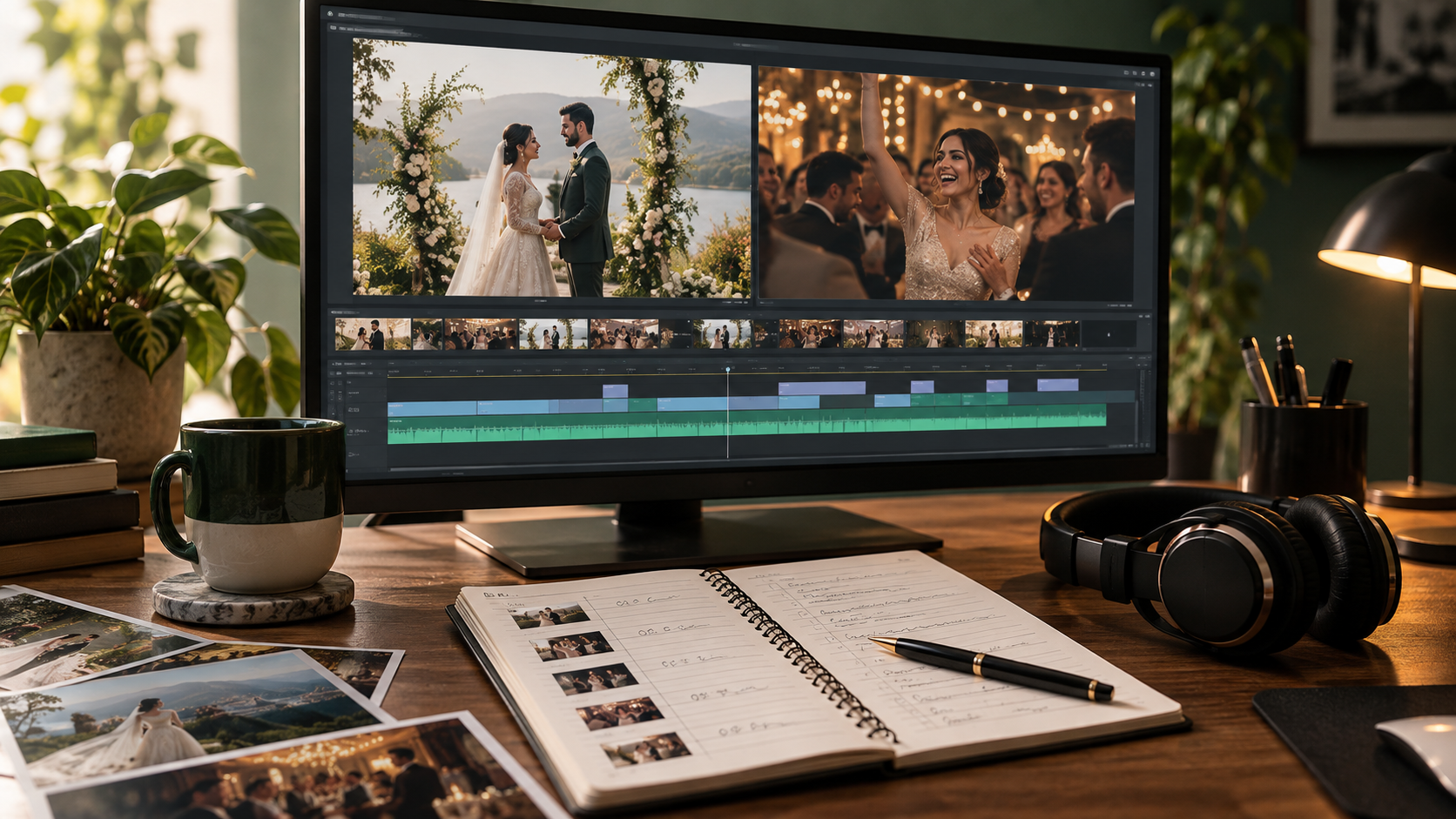
Sending your editor a beautiful wedding film with the message “Make it like this” leaves an important question unanswered: which part do you want them to follow?
You might love the opening, while your editor notices the colour palette. Your studio may want the same storytelling approach without wanting the same transitions or music.
A useful wedding film reference makes these preferences clear. It gives your editor direction while leaving room for the couple’s personality and the footage you actually captured.
Choose a Reference with a Clear Purpose
Before selecting a film, decide what you need it to communicate.
Are you showing the editor your studio’s usual style? Explaining a different approach for one project? Or highlighting a specific detail, such as a quiet opening or an energetic reception sequence?
Write down that purpose before sharing the link.
For example, “Use this as a reference for the gentle opening and speech-led storytelling” gives a more useful direction than “We like this film.”
A reference should answer a creative question rather than introduce more uncertainty.
Look for Similar Storytelling Opportunities
A reference is easier to apply when it has something in common with your project.
Consider the available dialogue, event structure and footage. A film built around personal vows may be less useful as a complete story reference if your wedding has no recorded vows.
Likewise, a reference featuring extensive preparation footage cannot tell your editor how to recreate moments your team did not capture.
You can still borrow an idea from a different wedding. Explain which part is relevant and which parts should not guide the edit.
The aim is to identify an approach that suits your material, rather than promise a matching result.
Separate Story, Pacing, Colour and Sound
Instead of treating the reference as one overall style, describe its individual elements.
Useful categories include:
- Story: how the film introduces the couple and develops their relationship.
- Pacing: where the edit feels calm, energetic or reflective.
- Colour: the visual mood you want to discuss.
- Sound: the balance of dialogue, music and natural reactions.
- Titles: whether the text feels minimal, formal or expressive.
You may want the storytelling from one reference but prefer your own studio’s colour treatment.
Say this directly. Otherwise, your editor may reasonably assume that every visible and audible choice is part of the brief.
Add Timestamps and Explain Why They Matter
A timestamp helps your editor find the relevant moment. A short explanation tells them what to learn from it.
For example:
- 00:15–00:35: We like how the opening allows the scene to breathe before introducing dialogue.
- 01:10–01:30: This is the kind of change in energy we want between preparations and the celebration.
- 02:40–03:00: We like the space around the closing promise, rather than the exact shot sequence.
Use timestamps from the actual film you are sharing. These examples show the format of a note, not moments from a particular reference.
Avoid asking the editor to reproduce every cut. Describe the effect you want the sequence to create.
Include What You Do Not Want to Follow
A reference can be useful even when parts of it do not suit your studio.
Perhaps you like the emotional structure but want fewer slow-motion shots. You may appreciate the reception energy while preferring simpler transitions.
Make those boundaries explicit.
A brief can say, “Follow the restrained storytelling, but keep our usual title style and avoid the fast opening montage.”
This gives your editor a clearer creative direction than a list of references with no explanation.
Use Your Own Previous Films Where Possible
An approved film from your studio can be a strong reference because it shows the choices your team has already accepted.
Explain which elements should remain consistent across projects and which were specific to that wedding.
For example, your studio might prefer natural skin tones and clear dialogue across all films, while the music and narrative structure change with each couple.
You can browse our wedding film portfolio when exploring possible directions, then identify the details you would like to discuss for your own project.
A reference conversation works best when both teams understand the reason behind each preference.
Keep the Reference Set Focused
A large collection of unrelated films can make the brief harder to interpret.
Choose a main reference, then add another only when it answers a different question. Label its role clearly, such as “colour discussion only” or “reception pacing only.”
If two references suggest conflicting approaches, decide which preference takes priority.
For instance, a quiet documentary opening and a rapid montage opening cannot both guide the same opening sequence equally. Your editor needs to know which direction matters more.
Send a Brief That Connects the Reference to Your Footage
A useful reference brief can be short:
- Main reference link.
- Relevant timestamps.
- What you like about each selected moment.
- What should not be copied.
- Available footage and dialogue that support the direction.
- Required deliverables.
- Creative choices that need discussion before editing.
When discussing wedding video editing services, send this brief alongside your footage details and expected outputs.
This helps the editing conversation focus on practical choices rather than assumptions about the word “cinematic.”
Review the First Cut Against the Agreed Direction
When the first version arrives, return to the notes you shared.
Does the film follow the intended emotional structure? Are the changes in pace appropriate? Does the sound support the story in the way you discussed?
Judge the edit against your footage and brief, rather than comparing every shot with the reference.
If something needs to change, explain the difference. “The opening feels busier than the quiet approach we selected” is more actionable than “It does not look like the reference.”
Keep the feedback connected to the original creative goal.
Give Direction Without Losing the Couple’s Story
A wedding film reference should help your editor understand your taste. It should also leave room for moments that belong to this wedding.
The most useful brief explains what you admire, why it works and how it relates to your footage. That gives the editor a foundation for shaping an original film with a direction your studio recognises.
Twist Media supports wedding studios with wedding film post-production from Surat, India. Share your reference films, footage details and required deliverables to discuss your next wedding editing project.