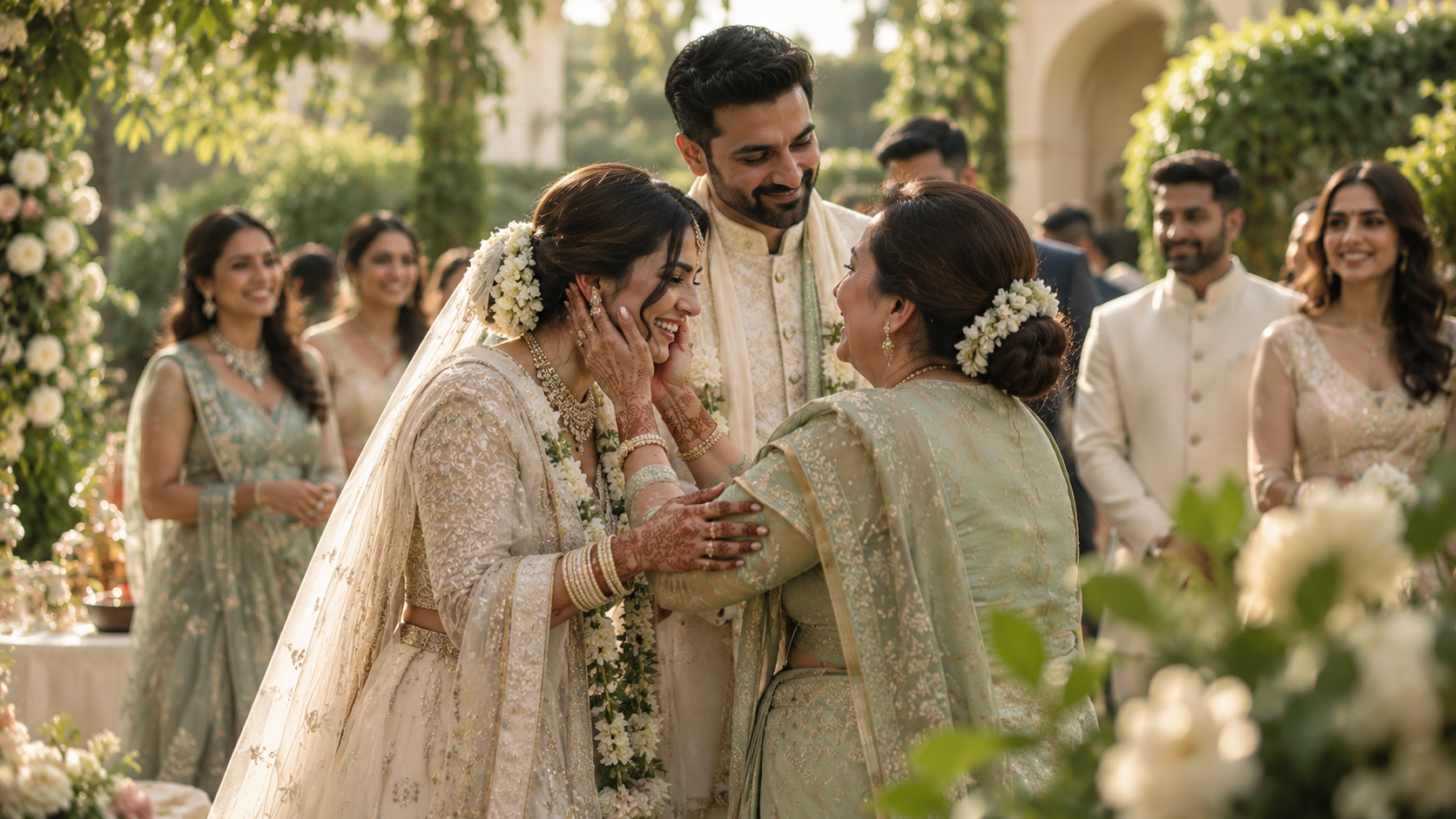
A wedding highlight film tells the couple’s story, but the people around them are part of that story too. A parent waiting before the ceremony, friends sharing a laugh or relatives welcoming the couple can reveal relationships that portraits alone cannot show.
The challenge is deciding which guest moments belong in a short film. Including every familiar face can interrupt the story. Leaving guests out entirely can make the celebration feel disconnected from the people who made it meaningful.
A useful approach is to choose moments that show a relationship, explain a scene or add something personal to the couple’s experience.
Begin with Relationships, Not a List of Faces
Before selecting guest shots, ask the studio or couple which relationships need particular attention.
Do not assume that the person closest to the camera is the most important person to include. Family structures and friendships differ, and the footage does not always explain those connections.
A brief relationship note can identify:
- Parents, guardians and other important family members.
- Friends who played a meaningful role in the day.
- People the couple specifically wants included.
- Any sensitive relationships or inclusion preferences.
- Moments that matter for reasons the editor may not know.
Treat these notes as guidance for selecting meaningful footage, rather than a promise that every person will receive equal screen time.
Choose Actions That Reveal a Connection
A guest looking towards the camera identifies a face. A guest interacting with the couple can reveal a relationship.
Look for small actions: someone helping with preparations, a reassuring touch before the ceremony, an embrace after a speech or friends making the couple laugh.
Ask what the shot contributes. Does it show support, affection, anticipation or shared excitement?
A simple interaction can be more valuable than a technically impressive shot that adds little to the story. Where possible, choose footage that lets the relationship become visible without needing an explanation.
Keep Reactions Connected to the Actual Moment
Reaction shots can help viewers experience an event through the people watching it. They also need context.
Be careful about placing a guest’s tears, laughter or applause beside a different event. The edit may suggest that they were reacting to something they did not witness.
For important reactions, check the original sequence and any synchronised camera recordings available. If the connection is uncertain, avoid presenting it as a direct response.
A general shot of guests enjoying the reception can establish atmosphere. A close-up placed immediately after a specific promise can imply something much more precise.
Choose the placement with that difference in mind.
Balance Familiar Faces with Story Progression
A short highlight has limited room. Several guest shots performing the same role can slow the film without revealing anything new.
After choosing a moment, ask whether the next shot adds a different relationship, action or perspective.
For example, a parent’s embrace followed by friends celebrating may broaden the emotional picture. Several similar shots of seated guests may simply repeat the idea that people attended the ceremony.
This is not a rule against quieter images. A still, attentive face can be powerful when it belongs to a meaningful moment.
Keep the selection purposeful rather than filling a section with available coverage.
Give Group Shots Enough Time to Be Understood
A group shot may contain people the couple will want to recognise. Cutting away too quickly can make their inclusion feel incidental.
Review whether the frame is clear enough and stays on screen long enough for its purpose. Avoid using a crowded wide shot as a substitute for a promised meaningful appearance.
If the brief requests a specific person, check that they can actually be identified in the selected footage.
At the same time, keep the highlight’s pace in mind. Longer coverage of guests may belong in a documentary edit or another agreed deliverable.
Discuss these expectations before editing begins.
Use Guest Moments to Connect Scenes
Family and guest footage can help connect parts of the day.
A friend adjusting an outfit can lead into preparations. Guests arriving can introduce the ceremony. A shared embrace can close a sequence before the celebration begins.
These transitions work best when the footage belongs to the relevant event and location.
Look for an action that moves the story forward, rather than inserting a reaction only to cover a cut. The connection should remain understandable even without music.
When reviewing examples in our wedding film portfolio, notice how supporting people enter the story and how the focus returns to the couple.
Flag Sensitive or Unflattering Footage
Not every candid moment should be included simply because it was recorded.
Check for private conversations, visible personal information, awkward expressions or moments the couple has asked to keep out.
If you are unsure whether a sensitive shot belongs, raise the question with the studio before including it in the client review.
Document the resulting preference so another version does not accidentally restore the footage.
The aim is to preserve personality while selecting moments the studio and couple are comfortable sharing.
Send Your Editor Useful Guest Notes
A clear guest-selection brief reduces guesswork.
Include names or approved identifiers, the relationship to the couple and timestamps for meaningful footage. A reference image may help distinguish people when it is shared appropriately for the project.
Separate essential requests from optional suggestions.
Useful notes might say:
- Please include the grandmother’s embrace after the ceremony.
- The person helping with preparations is the bride’s sister.
- Keep the friends’ interaction before the entrance if it suits the sequence.
- Please exclude the private conversation beside the stage.
- This family group is important; check that everyone is visible.
When discussing wedding video editing services, include these notes alongside your film style and required deliverables.
Review Who Appears and Why
During the first review, watch for more than whether someone is present.
Does their moment communicate a connection? Is the context accurate? Does the film return naturally to the couple? Have repeated guest shots displaced a more meaningful interaction?
Use timestamps when requesting changes. “Please replace this general crowd shot with the father’s embrace after the ceremony” gives the editor a clear action and reason.
If important coverage is missing from the source footage, discuss the available alternatives rather than expecting the edit to create a moment that was not captured.
Keep the Couple at the Centre of a Shared Story
The most useful guest moments do more than document attendance. They show the people who supported, celebrated and shared the day with the couple.
Choose them with attention to relationships, context and pacing. A few thoughtful selections can give a wedding highlight a stronger sense of belonging without losing its central story.
Twist Media supports wedding studios with wedding film post-production from Surat, India. Share your footage details, important family moments and required deliverables to discuss your next wedding editing project.