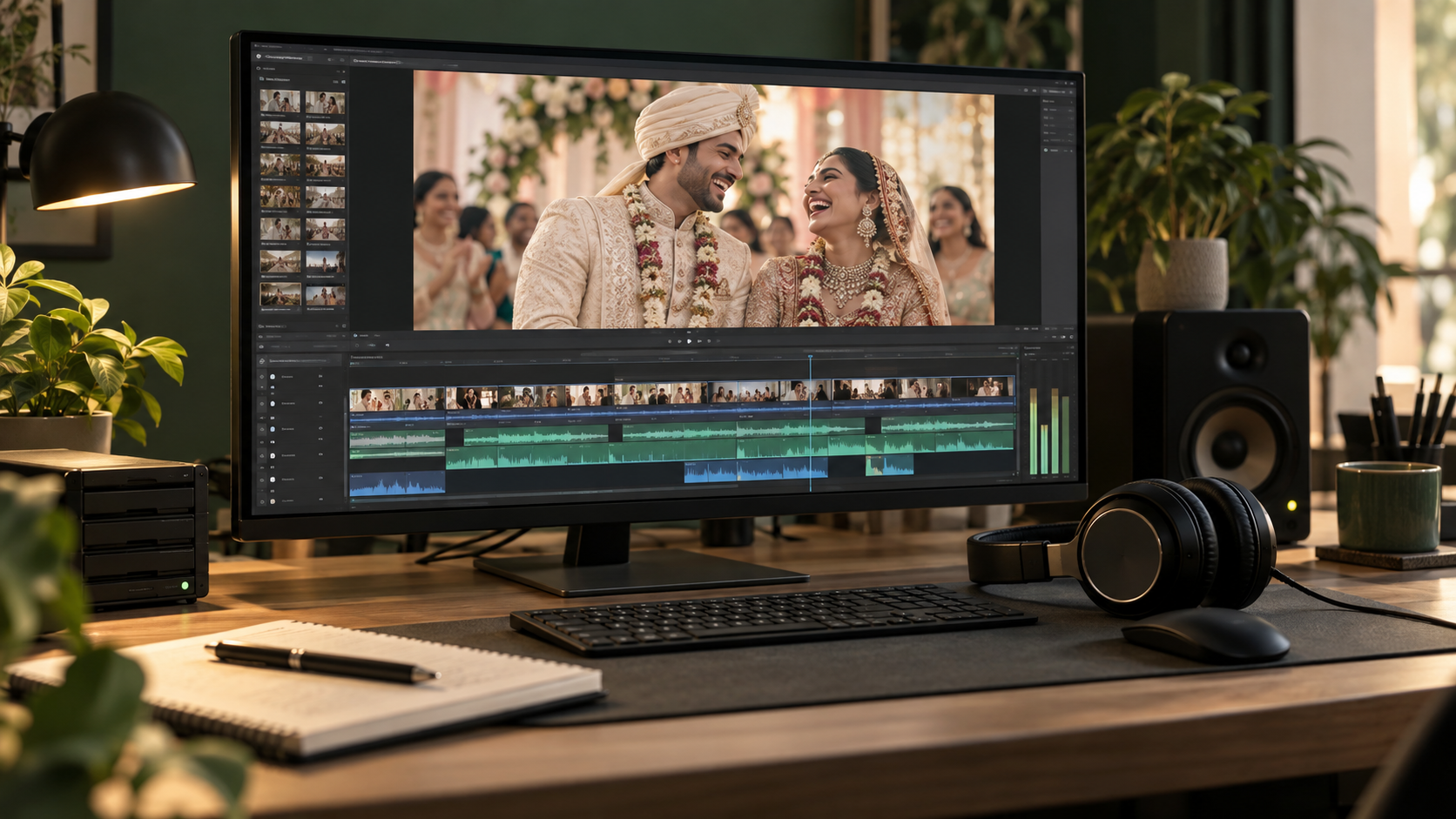
A wedding film can look beautiful and still feel distant from the day itself. Music creates atmosphere, but the sound of a shared laugh, a cheering room or footsteps before a ceremony can bring viewers closer to the experience.
Natural sound in wedding film editing means using audio captured at the event to support the story. It includes more than vows and speeches: small reactions, movement and the atmosphere of a place can all contribute.
For wedding studios, the challenge is deciding which sounds deserve attention and where they help the film feel more personal.
Listen for Moments That Belong to This Wedding
Start by listening to the footage without adding music. Notice sounds that reveal something about the people or the setting.
A quiet laugh during preparations may show the couple’s nervous excitement. Guests cheering during an entrance can communicate the energy of the celebration. A family member’s spontaneous reaction may carry more personality than a carefully staged shot.
Useful moments might include:
- Laughter between the couple and their friends.
- Applause after a ceremony.
- A parent’s brief reaction during preparations.
- Footsteps, fabric movement or a door opening.
- The atmosphere of an outdoor venue.
- Guests celebrating during the reception.
Choose sounds because they contribute to the scene, rather than simply because they are available.
Give Natural Sound a Clear Role
Not every sound needs to become a featured moment. Some sounds establish a location, while others draw attention to a specific action or emotion.
For example, a short section of outdoor ambience can introduce the ceremony setting. A burst of applause can mark a change from a quiet exchange to a celebration.
Before adding a sound, ask what it contributes. Does it help the viewer understand the setting, connect with a person or follow a transition?
If it adds nothing beyond noise, leave it out. A small number of purposeful choices can be more effective than a timeline filled with sound effects.
Make Space Around Important Reactions
Natural sound is easy to overlook when music occupies the entire film at the same intensity.
Allow selected moments to come forward. A laugh might benefit from a brief reduction in music, while applause may work as a bridge into the next sequence.
Avoid sudden changes that feel accidental. Listen to the lead-in and the moment after the sound, not just the isolated clip.
The goal is to guide attention smoothly. Viewers should feel the reaction without becoming distracted by how the audio was edited.
Keep Sounds Connected to Their Source
When a visible action has a recognisable sound, check that the timing feels connected. A door closing, a clap or a spoken reaction should not appear noticeably delayed.
Be careful when moving reactions between scenes. Applause from one event can imply approval of something entirely different if placed over an unrelated moment.
Preserve the meaning of the footage. Use the sound from the relevant moment where possible, and avoid creating a misleading impression of what happened.
When exploring our wedding film portfolio, listen as well as watch. Notice where sound makes a scene feel immediate and where quieter moments allow the images to carry the story.
Distinguish Atmosphere from Distracting Noise
A lively wedding is rarely silent. Background conversation and movement can be part of the atmosphere, but they can also make an important moment harder to hear.
Listen for distractions such as handling noise, wind, abrupt microphone bumps or unrelated conversations close to the camera.
Do not assume that every recording can be repaired perfectly. If a sound is unclear or heavily damaged, consider whether another recording from the same moment is available.
Sometimes a simpler edit works better than pushing a poor recording into the foreground.
Protect Dialogue When Combining Audio Layers
Music, speech and natural sound should work together without competing for attention.
If a vow or speech line is the focus, keep other layers from obscuring the words. A busy room recording may suit the beginning of a scene but become distracting once the speaker starts.
Check the transitions between dialogue and ambience. A background sound that disappears suddenly can make a cut feel more noticeable.
Listen to the full passage at a normal playback volume. If understanding the words requires effort, simplify the mix before adding more layers.
Tell Your Editor Which Sounds Matter
A useful brief includes sound priorities alongside visual references.
If a particular laugh, family reaction or ceremony moment matters to the couple, identify it clearly. Include the source filename and timestamp so the editor can locate it.
Separate essential moments from optional suggestions. This gives the editor room to shape the film while protecting the details that matter most.
Your notes can include:
- The location of the original recording.
- Who is speaking or reacting.
- Why the moment is meaningful.
- Whether the sound should be prominent or subtle.
- Any privacy concerns about background conversations.
- An alternative recording, if available.
When discussing wedding video editing services, share these details early so sound becomes part of the creative brief.
Review the Film with Your Ears First
During a review, listen to a section without watching the screen. This can help you notice abrupt transitions, repeated ambience or sounds that compete with dialogue.
Then watch the same passage to assess whether the sound supports the images.
Try both headphones and an ordinary speaker. The purpose is to check whether important moments remain understandable in everyday viewing conditions.
Give specific feedback. “Please bring the guests’ reaction forward after the ceremony” provides a clearer direction than “Add more atmosphere.”
Let the Wedding Sound Like Itself
Natural sound does not need to appear in every scene. Its value comes from choosing moments that make the film feel connected to the people and the place.
A shared laugh, a short pause or a room full of applause can bring warmth to an edit when used with care. Combined with thoughtful music and clear dialogue, these details help the film preserve more than the appearance of the day.
Twist Media supports wedding studios with wedding film post-production from Surat, India. Share your reference style, required deliverables and meaningful audio moments to discuss your next wedding editing project.