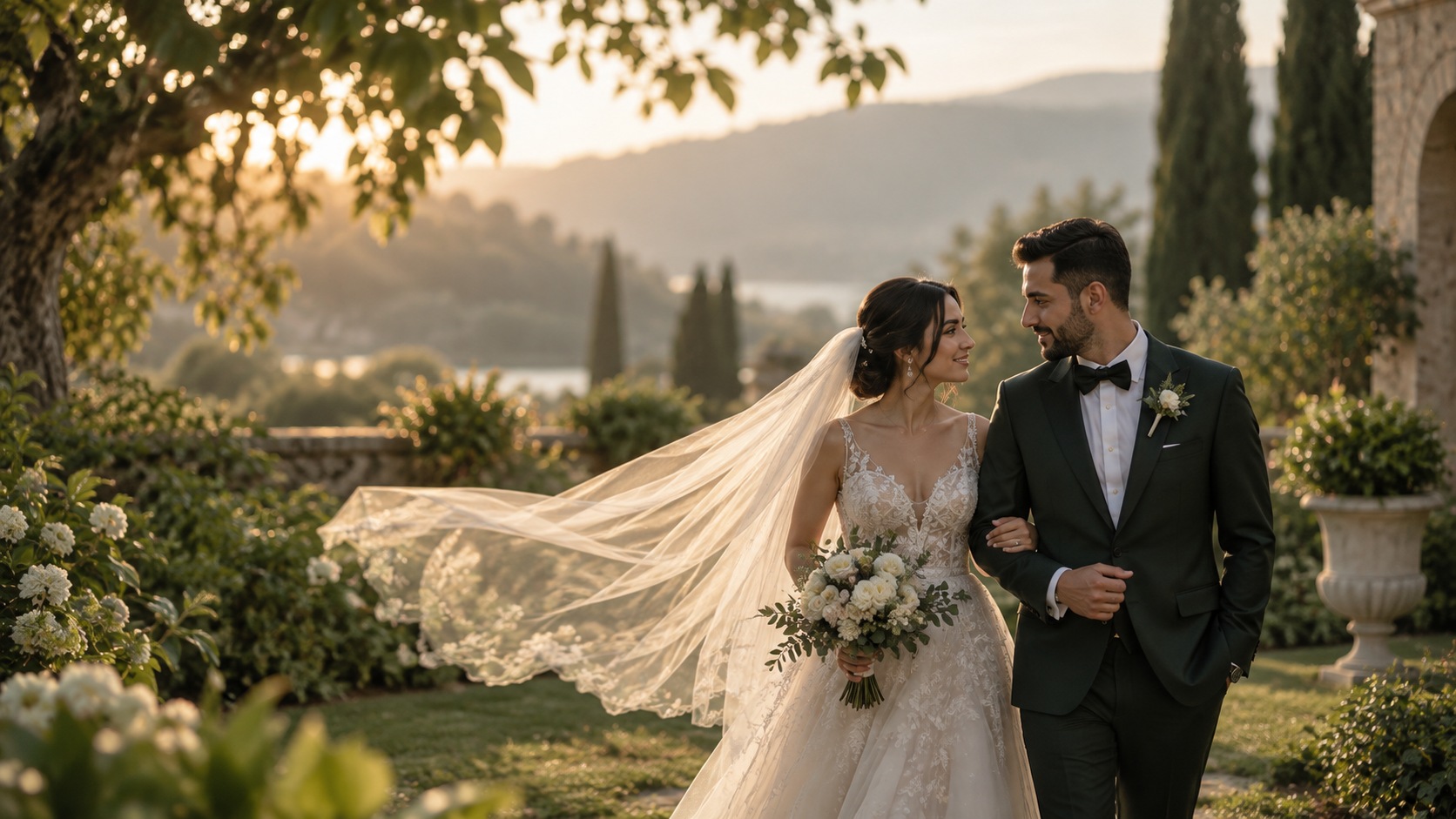
Slow motion can give a wedding moment room to breathe. A passing glance, a flowing veil, or an embrace may become easier to appreciate when the movement slows down.
But slowing every beautiful shot can make a film feel repetitive. Conversations lose their natural rhythm, celebrations lose energy, and small actions take longer than the story needs.
The useful question is not “Can we slow this shot down?” It is “What does slowing it down help the viewer notice?”
For wedding studios, that question connects an editing technique to the people and moments at the centre of the film.
Choose a Moment with Something to Reveal
Slow motion works best when there is a detail worth spending more time with.
It might be a change in expression, a brief touch between the couple, or the movement of fabric during a portrait session. The shot should offer something beyond being visually attractive.
Watch it at normal speed first. Identify what the viewer might miss and decide whether a slower version makes that detail more meaningful.
If the shot communicates its purpose clearly in real time, slowing it down may add length without adding much to the story.
Keep Conversations and Reactions Natural
Spoken exchanges usually depend on their original timing. A pause before an answer, a quick laugh or an unexpected comment can be part of what makes the moment personal.
Keep footage at its natural speed when the viewer needs to see speech and hear the matching words.
Even without dialogue, some reactions work better in real time. A spontaneous hug or an excited entrance may feel more immediate when its movement retains the energy of the day.
Slow motion is a creative choice, not a requirement for an emotional scene.
Use Contrast to Shape the Pace
A film becomes more expressive when its rhythm changes with the story.
A quiet portrait sequence may suit slower movement. A lively celebration may benefit from real-time footage and more energetic cuts. Returning to a restrained pace near the ending can create another shift.
Avoid applying the same treatment to every part of the wedding. When all movement is slowed, it becomes harder for individual moments to stand out.
Consider what happens before and after the shot. A slow image can provide breathing space between busy sequences, but several similar shots together may hold up the story.
Check the Footage Before Choosing the Speed
The available footage affects how a slowed shot will look.
Confirm the clip’s frame rate and how it is currently being interpreted by the editing application. Footage recorded at a higher frame rate can provide more captured frames for slower playback, but the recording rate alone does not decide how the clip will play in the edit.
For example, when footage containing 50 captured frames per second is played at 25 frames per second using every captured frame once, the action takes twice as long.
Some camera modes already save footage for slow playback. Check the file and recording settings before applying another speed change.
Share these details with your editor rather than assuming every clip should receive the same treatment.
Inspect the Movement, Not Just a Still Frame
A slowed shot can look attractive when paused and still feel distracting during playback.
Watch for uneven movement, ghosting or distorted edges. Pay attention to hands, faces, moving fabric and people passing in front of one another.
Different retiming methods can produce different results. Do not assume an automated option will suit every shot.
Review the rendered result at normal viewing speed. If the movement looks distracting, try a less aggressive speed change, another method, or the original speed.
The effect should support the moment without drawing attention away from it.
Decide What Should Happen to the Sound
Changing a clip’s playback speed can also affect its audio, depending on the method used.
Before retiming a shot, decide whether its original sound needs to remain synchronised. A visible conversation, clap or spoken reaction requires particular care.
A slow portrait shot may sit comfortably beneath music or separate narration. A shot of someone speaking may need to remain at normal speed if their dialogue is part of the scene.
Do not treat the picture and sound as unrelated choices. Listen to the complete sequence after making the adjustment.
Match the Choice to the Deliverable
A short teaser, a highlight film, and a documentary edit have different storytelling needs.
A teaser may use a few carefully selected slow shots to establish mood. A longer documentary sequence may need real-time action so viewers can follow an event clearly.
Describe your preference for each deliverable. “Use slow motion selectively in the portraits, but keep the ceremony exchanges natural” gives the editor a practical direction.
When discussing wedding video editing services, include this preference alongside the required film types and your reference examples.
Give References with Specific Notes
Instead of asking for “more cinematic slow motion,” identify the result you want.
Useful notes might include:
- Allow more time for the couple’s expressions during the portrait sequence.
- Keep the reception entrance energetic and close to its original timing.
- Avoid slowing shots where the speaker’s mouth is visible during dialogue.
- Use fewer consecutive slow shots in the opening.
- Preserve the natural timing of the family’s reaction.
Browse our wedding film portfolio when exploring references, then explain which moments and pacing choices are relevant to your own footage.
A clear note gives the editor room to choose an appropriate technique.
Review the Film for Repetition
Watch the complete edit before judging individual slow-motion shots.
Does the pace change with the events? Are there several shots performing the same role? Does the film spend too long on details while moving quickly past important interactions?
If a sequence feels stretched, remove repeated ideas before asking for more effects or transitions.
A technically smooth shot can still be unnecessary. Keep it because it contributes to the film, not simply because it was recorded for slow motion.
Let the Story Decide the Speed
Slow motion is most useful when it draws attention to something that matters. Real-time footage is equally valuable when it preserves a conversation, an unexpected reaction, or the energy of a celebration.
Choosing between them is part of shaping the story. The goal is a film whose movement feels appropriate to the couple and the day.
Twist Media supports wedding studios with wedding film post-production from Surat, India. Share your footage details, preferred pacing, and required deliverables to discuss your next wedding editing project.